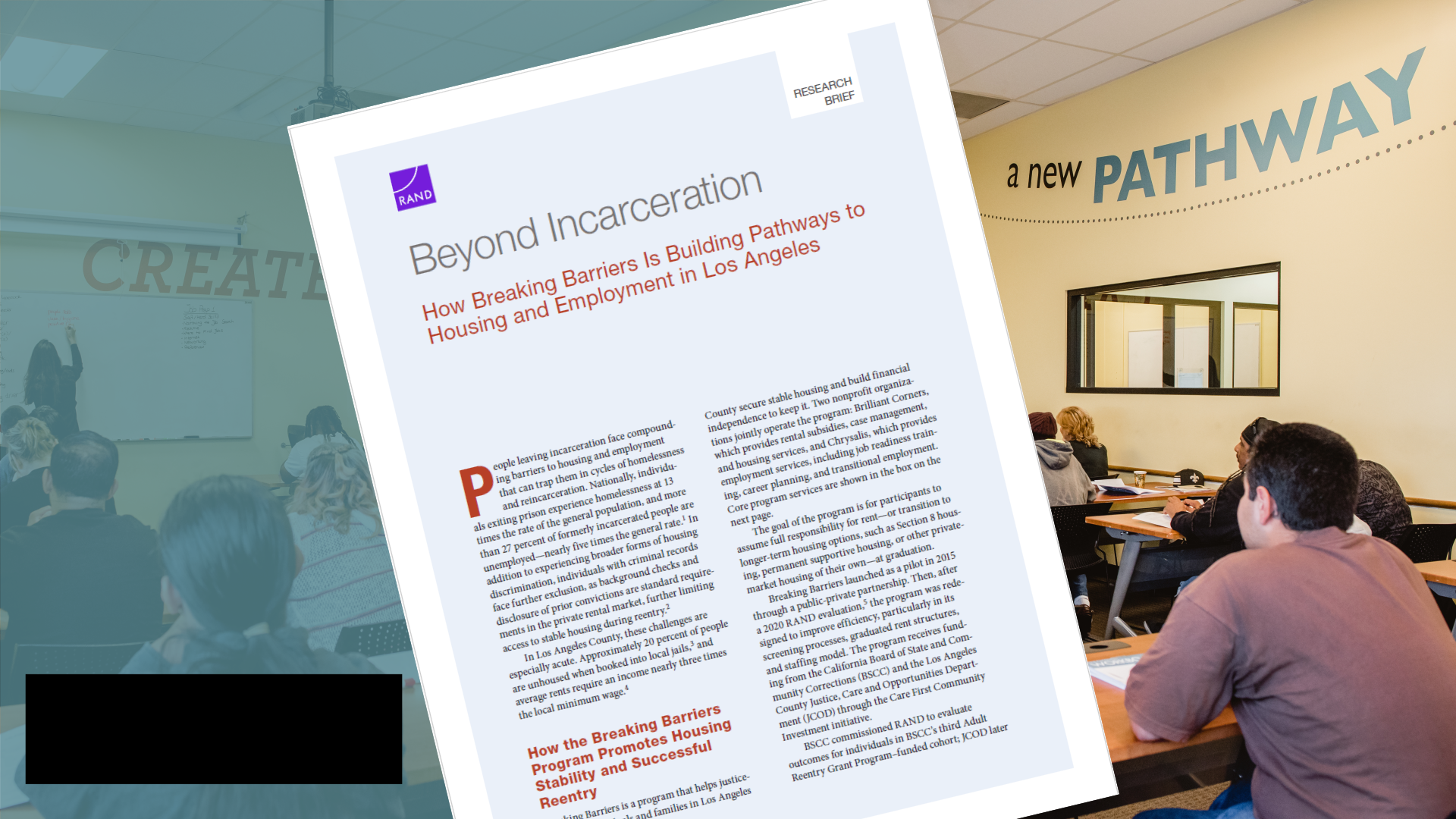
A recent evaluation by the RAND Corporation of the Breaking Barriers program reinforces what Chrysalis has long understood: employment is essential to long-term stability. Housing alone is not enough and must be integrated with employment services, especially with individuals who are justice-impacted.
As cited in the study, individuals exiting prison experience homelessness at 13 times the rate of the general population, and more than 27 percent of formerly incarcerated people are unemployed—nearly five times the national rate.*
The Los Angeles County Justice, Care and Opportunities Department’s (JCOD) Breaking Barriers program, operated by Brilliant Corners in partnership with Chrysalis, was designed to address the dual challenges of homelessness and reentry by combining rental assistance, case management, and employment services. The evaluation confirms that this integrated model is working. But it also points to a critical truth: employment is what allows stability to last.
The evaluation highlights strong housing outcomes, with more than 80 percent of participants remaining housed after one year. In a region like Los Angeles—where high rents and limited supply make housing difficult to secure—this level of stability is significant.
At the same time, the report underscores persistent structural barriers: stagnant wages, limited employer willingness to hire individuals with criminal records, and legal restrictions that narrow job opportunities. These challenges make one thing clear:
- Without reliable income, housing stability is fragile.
- Even with subsidies, participants must eventually navigate rent, utilities, and daily expenses on their own. Long-term success depends not just on accessing housing—but on being able to afford and sustain it.
The Data Points to Deep Support and Employment as Routes for Success
A closer look at the evaluation reveals that the strongest outcomes are tied not just to housing placement, but to what happens after. Although the report notes that initial outcomes were mixed, 75 percent of program participants were earning above minimum wage at graduation. We expect wage rates for participants to continue to grow over time.
The report also demonstrates how outcomes improve over longer periods. Longer housing retention was significantly associated with a higher likelihood of employment at program exit among participants housed with a subsidy during the program: the probability of employment rose from 45 percent at six months housed to 61 percent at 18 months housed. Other findings included:
- Participants placed in employment or education far exceeded program goals, demonstrating both demand for and effectiveness of workforce services
- Most employed participants earned above minimum wage, signaling progress toward livable income
- Longer program engagement was associated with improved outcomes across the board, including housing retention and reduced likelihood of incarceration
Why Employment Services Matter
As a Breaking Barriers partner, Chrysalis provides job readiness training, career planning, and transitional employment opportunities designed specifically for individuals facing barriers to work.
More than 10 years ago, when Chrysalis joined the pilot for this program, we knew this partnership would model how organizations can bring their core expertise together and, as a result, ensure better outcomes for the people utilizing services. The RAND evaluation highlights that strong coordination between housing and employment providers is central to the program’s success.
This isn’t incidental. It reflects a deeper reality:
- Housing creates the conditions for stability.
- Employment creates the conditions for independence.
Participants don’t just need a place to live; they need a pathway to earn, grow, and sustain that stability over time. If we address only one side of this equation, we risk falling short of long-term impact.
Looking Beyond: Recommendations from the Beyond Incarceration report
The RAND evaluation also offers important guidance for our community. While program design matters, broader economic conditions—particularly wages and housing affordability—continue to shape outcomes.
To build on the success of programs like Breaking Barriers, investment strategies should:
- Integrate employment services as a core component of housing interventions
- Support workforce pathways that lead to living-wage jobs
- Address systemic barriers that limit access to employment for justice-impacted individuals
Breaking Barriers demonstrates what’s possible when housing and employment services work together and at equal levels of importance. The RAND evaluation confirms that this integrated approach can reduce recidivism, improve housing stability, and create pathways to independence.
We are incredibly proud of our program participants and our work with JCOD and Brilliant Corners, with support from the California Board of State and Community Corrections. Chrysalis is committed to continuing to provide employment-focused services as part of the Breaking Barriers program. We are grateful for the opportunity to have something we believe in so deeply evaluated—and proven to work.
Find the full Beyond Incarceration report by RAND here.
* Lucius Couloute, Nowhere to Go: Homelessness Among Formerly Incarcerated People, Prison Policy Initiative, August 2018; Lucius Couloute and Daniel Kopf, Out of Prison & Out of Work: Unemployment Among Formerly Incarcerated People, Prison Policy Initiative, July 2018.